
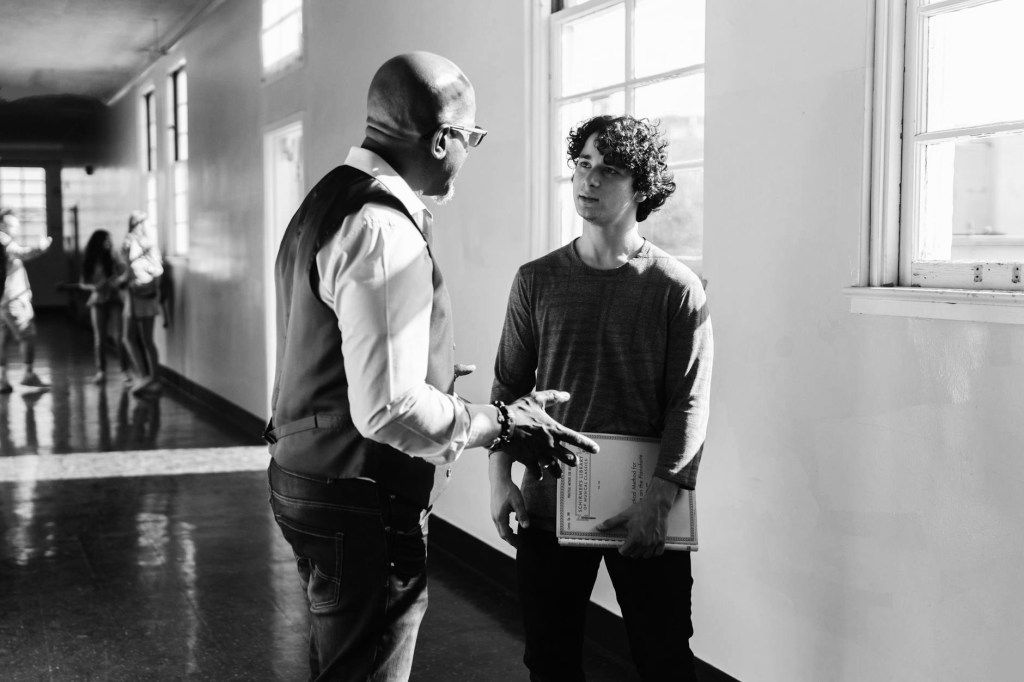
Sometimes the smallest exchanges hold the deepest truths.
A smile in passing, a shared laugh, a simple “How are you?” whispered in the hallway.
They seem fleeting—ordinary, even—but beneath them lives something sacred:
the human longing to be known, to be safe, to belong.
This is where connection begins, and where the quiet work of love takes root.
Kids today are craving connection in a way my generation never experienced. They want the support and guidance of strong adult figures—even when they appear to despise it. In my work as a school counselor, I have countless quick hallway chats with students: a “good morning,” a laugh over something small, a gentle reminder to get to class.
These moments matter—they build familiarity and trust in tiny, steady increments. But they don’t always meet the deeper need of today’s children, especially in the multicultural setting where I work. Many of my students move between cultures, languages, and family systems. They’re growing up in-between—belonging everywhere and nowhere all at once.
I can’t tell you how many times I’ve heard a student say they have no adults they trust. Not parents. Not teachers. No one. This is the quiet battle behind every “quick chat” and every smile in the hallway—the invisible work of building a culture of kindness, acceptance, and safety from the ground up.
Every child needs to feel what Dr. Dan Siegel and Dr. Tina Payne Bryson describe in The Power of Showing Up as the Four S’s—a framework grounded in attachment and brain research that reminds us what every young person is silently asking for:
Safe. We can’t always protect a child from hurt or disappointment. But when we offer them a sense of safe harbor, they begin to take the healthy risks that lead to growth and change.
Seen. To truly see a child, we must notice their emotions—both the laughter and the silence—and tune in to what’s happening beneath the surface of their behavior.
Soothed. Soothing isn’t about removing struggle; it’s about showing up when life gets hard and teaching them that they don’t have to suffer alone.
Secure. When a child knows they can count on you—when safety, seeing, and soothing become consistent—they begin to trust. From that trust, they thrive.
According to David C. Pollock and Ruth Van Reken in Third Culture Kids: Growing Up Among Worlds, research shows that the parental relationship is the single most important factor in determining whether a child is successful—especially for those growing up between cultures. This highlights the profound role that trustworthy adult relationships play in shaping a child’s life. These relationships form the foundation on which a child’s identity is built and their sense of value is understood.
Children need to feel known, protected, and comforted by the adults in their lives. A school counselor alone cannot provide that—not fully. And as I’ve learned in my own journey as a single parent, even one safe, supportive adult may not be enough. There is deep value in a community of safe, supportive, and present adults surrounding every child. It truly does take a village—one where each person carries the quiet commitment to see, soothe, and show up.
And yet, it’s also true that brief interactions can plant seeds. A single moment of genuine connection—a hallway greeting, a shared laugh, a kind acknowledgment—can begin the process of growth. But those seeds need nurturing. Hallway chats do matter, when there is a team that helps the garden grow. Connection thrives not in isolation, but within a wider ecosystem of care.

In my counseling work, I meet students who long for these Four S’s. Their behavior often shouts what their voices can’t say: “Will you see me? Will you stay?“
Maybe this is why I lean so far in the opposite direction with my own children. My middle son feels confident enough to say “no” to me when he disagrees—something that both frustrates and amazes me. My youngest trusts me so completely that I often get his worst moods, his biggest feelings, his truest self. There are moments when I’m helping them navigate topics most mothers might shy away from—shaving, puberty, boundaries, identity—and though I sometimes feel unprepared, I’m grateful that they come to me.
It reminds me that safety and connection don’t always look calm. Sometimes they look like slammed doors, honest words, and the messy work of showing up again and again.
The next time you cross paths with a child—your own or someone else’s—pause, just for a breath. See if you can offer not only a smile, but a moment of genuine presence. Because behind that small exchange might be a silent question, one that every child asks in their own way:
“Can I trust you to see me, soothe me, and stay long enough for me to feel safe?“
Whether we are parents, teachers, mentors, neighbors, or coaches, our presence matters. Each of us carries the power to be part of a child’s ecosystem of care—to plant seeds of trust, nurture them with attention, and remind the next generation that they are not alone.
According to Dr. Barbara Fredrickson, we can begin to build these connections through micro-moments—the small, shared experiences of positive emotion that create what she calls positivity resonance. These moments may seem fleeting, but they plant the seeds of love, support, and hope. Over time, they nourish growth, strengthen resilience, and shape the way children experience safety and belonging.
Interconnection isn’t just a bonus—it’s essential. It’s the invisible thread that weaves through every smile, every kind word, and every act of care. It’s what makes life happier, healthier, and ultimately more whole—for them, and for us.
Well Stirred Connection:
Take one mindful moment today to truly see a child—your own, a student, a neighbor, or even one who simply passes by.
What might shift if, for just a few seconds, you paused long enough to let them feel safe, seen, and significant?
 Well-Stirred & Wondering
Leave a comment