

This March, I’ve been given a second chance to highlight something deeply important to me that I nearly missed at the start of February—school counseling and social-emotional learning.
The sixth annual International SEL Day takes place on March 2, kicking off SEL Week through March 8. It’s a time dedicated to uplifting skills like empathy, collaboration, emotional regulation, and healthy conflict resolution.
But for me, SEL isn’t something that just lives on my calendar. It’s something I witness and strive to grow every day.
At the international school I work at, SEL shows up in quiet conversations before a student shuts down In learning how to pause before reacting. In repairing harm instead of ignoring it. In building spaces where students know they are safe to feel, speak, and grow. It also shows up in the weekly skill building groups on mood regulation and social skills that get the kids excited to come see the school counselor.
At home, SEL shows up at the dinner table, during homework frustrations, and in moments when emotions run ahead of words. It looks like teaching flexibility, modeling apology, naming feelings out loud, and choosing connection—even when it would be easier not to.
The same skills I teach at school are the ones I practice with my own family, even when its challenging.
SEL matters because life is demanding. Because children are carrying more than we often see. Because adults are, too. I know that I am. Social and emotional skills don’t just help us succeed—they help us cope, relate, and stay human with one another.
During SEL Week, my hope is simple: that we notice the ways these skills already live among us—and choose to practice them with intention, compassion, and care.
Because SEL isn’t a program we turn on for a week.
It’s how we show up—for our students, our families, and ourselves each and every day.
Five Social-Emotional Skills We Practice Every Day
When we talk about social-emotional learning, it can sound abstract—like something taught from a chart or a curriculum guide. But in reality, SEL shows up in the smallest, most ordinary moments.
These are five core social-emotional skills I see and practice daily—at school and at home.

1. Self-Awareness
This is the skill of noticing what’s happening inside.
It’s learning to name feelings instead of being ruled by them. It’s recognizing when frustration, fear, or overwhelm is building—before it spills out sideways. At school, this might look like a student learning to say, “I’m feeling overwhelmed,” instead of shutting down. At home, it might look like pausing long enough to admit, “I’m tired—and that’s affecting how I’m responding.”
Self-awareness is where change begins.

2. Self-Management
Once emotions are recognized, this skill helps us respond rather than react.
Self-management includes regulating big feelings, managing stress, practicing flexibility, and staying with something even when it’s hard. It’s the deep breath before answering. The break instead of the blow-up. The choice to try again after a mistake.
This is one of the most practiced—and most needed—skills in both classrooms and families.
3. Social Awareness
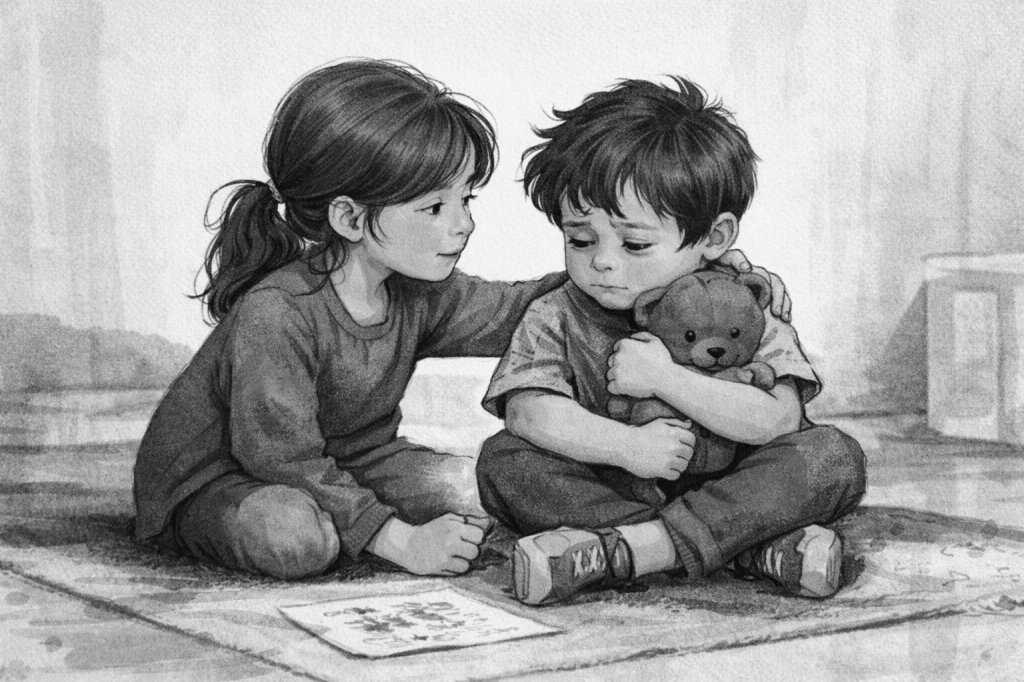
This is the ability to notice and care about what others might be experiencing.
Social awareness grows empathy. It teaches children—and adults—to read the room, to recognize when someone else is struggling, and to understand that not everyone experiences the world the same way we do. It’s the quiet kindness. The pause before judgment. The recognition that behavior often carries a story beneath it.

4. Relationship Skills
These are the tools we use to build, maintain, and repair connections.
Relationship skills include communication, listening, cooperation, boundary-setting, and conflict resolution. They show up when students learn to work through disagreement instead of avoiding it—or when family members learn how to apologize and reconnect after a hard moment.
Healthy relationships aren’t conflict-free. They’re repair-rich.

5. Responsible Decision-Making
This skill helps us think through choices with care.
It’s considering consequences, making safe decisions, taking responsibility, and learning from mistakes. Responsible decision-making isn’t about perfection—it’s about reflection. It’s learning to pause and ask, “What happens next if I choose this?”
This skill supports independence, confidence, and integrity.
Why These Skills Matter
These five skills don’t just help children succeed in school. They help us all navigate life—with resilience, empathy, and self-respect.
They help families communicate more honestly.
They help classrooms feel safer.
They help communities function with greater care.
During SEL Week, my hope is that we don’t just name these skills—but notice where they are already being practiced, and choose to nurture them with intention.
Because social-emotional learning isn’t extra.
It’s essential.
 Well-Stirred & Wondering