
Some stories rise quietly — not in grand triumphs, but in the steady ways we keep showing up. This reflection is one of those stories, written for World Mental Health Day — a day that reminds us that tending to the mind is an act of courage, love, and faith.
Every year on October 10, the world pauses for World Mental Health Day — a day devoted to reflection, awareness, and action around mental well-being.
For me, it’s more than a date on a calendar. It’s a quiet reminder to pause and take stock — to honor the journey I’ve walked through personally and as a mother. It’s also a day to notice how the lessons of our own home connect with what research continues to teach us about nurturing mental health in children and families.
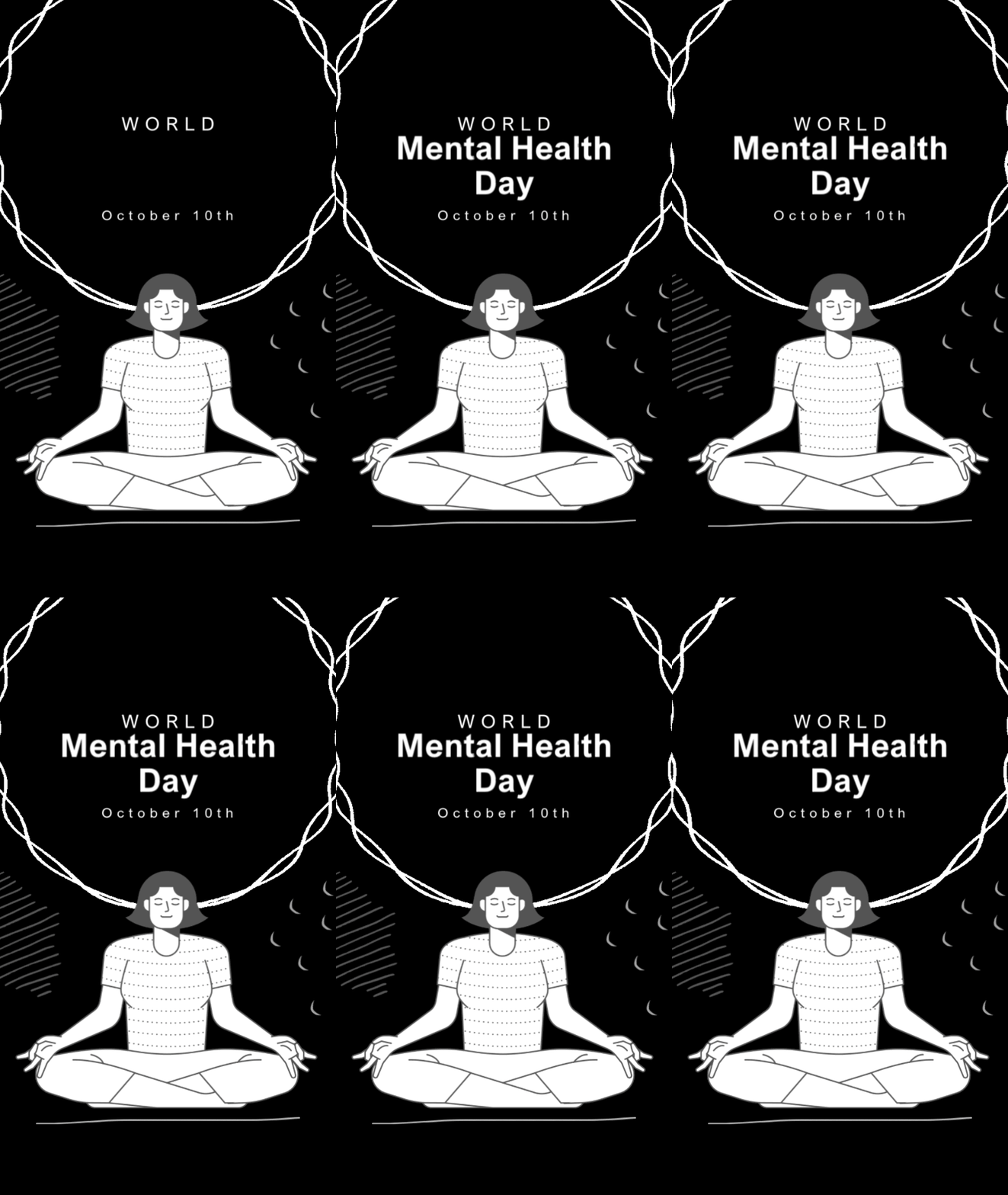
Why World Mental Health Day Matters
According to the World Health Organization (WHO), nearly 970 million people globally live with a mental health condition, with anxiety and depression among the most common. Mental health disorders are now one of the leading causes of disability worldwide.
For children and adolescents, the need is especially urgent. WHO estimates that one in seven young people aged 10–19 lives with a diagnosable mental health condition. Half of all mental health challenges begin before age 14, yet most go unnoticed or untreated.
The World Mental Health Report (2022) calls for more than awareness — it calls for transformation: better systems, more community-based care, and a culture where seeking help is seen as strength, not shame.
Our Story: When It Got Too Heavy
There was a time when the silence in my home carried its own weight.
After my separation, I often sat in the church lobby while my children were in Sunday School, too overwhelmed to walk into the sanctuary. I remember the ache of watching families worship together while trying to remind myself that God could still meet me there — even in the hallway.
Those early months were filled with long nights, school mornings that came too soon, and quiet dinners where I tried to hold everything together. My boys were grieving too — each in their own way.
My oldest began to close himself off, guarded but strong; my middle son carried his pain more quietly, often channeling it into perfection; and my youngest — my tender-hearted one — was the mirror to it all. His emotions ran close to the surface, his tears and fears honest and unfiltered. I still remember the day he saw me crying and ran straight into my arms. No hesitation. Just presence.
“Why are you crying, Mommy?” he asked.
How do you explain to a child that your tears are both for them and because of them — for the weight of what you’ve all carried, and the fear of what might come next?
We began to heal slowly, one habit, one moment at a time.
There were still mornings when everyone rushed, tempers flared, or school notes arrived with reminders of hard days. But there were also small victories — laughter returning at the dinner table, the comfort of bedtime stories, and the relief of realizing that resilience doesn’t mean not breaking; it means learning how to rebuild.
What Research Teaches — and What We Tried
1. Structure and Emotional Safety
Children flourish in predictability. Developmental research consistently shows that routines — mealtimes, bedtime rituals, consistent check-ins — give children a sense of security that supports emotional regulation.
In our home, dinner has become sacred time. Each night, we go around the table and share one good thing about our day and one challenge. It’s simple, but it opens space for honesty — for laughter, empathy, and the reminder that even hard days have bright spots.
Before bed, we wind down together — reading aloud or listening to audiobooks side-by-side. Those small shared rituals have softened anxious nights and anchored us in connection. They remind me that structure doesn’t have to be rigid — it can be tender.
2. Movement and Screen Balance
A 2025 study by Liang, Patel, and Gomez found that children and adolescents who spent four or more hours daily on screens were significantly more likely to show symptoms of anxiety, depression, and behavioral challenges. The researchers discovered that these risks were closely linked to reduced physical activity, irregular bedtimes, and shorter sleep durations.
So, we started to move more — through family walks, water aerobics for me, tennis and soccer for the kids, and lots of playtime in our courtyard with my partner and the boys.
Movement became medicine, and laughter often followed.
We also made a family rule to limit screen time on weekdays to school purposes only. Each evening ends with a “lights-off” time before sleep, giving everyone’s mind a chance to rest before the next day begins.
3. Sleep as Restoration
In the same study, Liang and colleagues highlighted that regular sleep patterns act as a major protective factor.
We aren’t perfect, but those nightly rhythms — no screens, calm stories, quiet time — have turned anxious evenings into gentler mornings.
4. Kindness, Belonging, and Bullying
October does not only hold World Mental Health Awareness day — it’s also Bullying Prevention Awareness Month, a reminder that creating emotionally safe spaces is vital to well-being.

Bullying is one of the strongest predictors of emotional distress in children. A 2023 study by Kowalski and Li involving over 95,000 students found that even mild bullying experiences were associated with higher rates of anxiety, depression, and sleep problems, while severe bullying intensified those effects.
That research made me think deeply about how we speak at home — about empathy, inclusion, and how we treat others. Our family mantra became: Kindness counts, even when it’s hard.
That truth echoes in my counseling work too. Whether it’s students in a school hallway or siblings around a table, I’ve seen how one kind word can shift an entire day — how safety begins with presence.
5. Early Support and Accessible Care
The World Health Organization notes that mental health care remains among the most underfunded areas in global health, even though early, community-based interventions are among the most effective.
When sadness or anxiety lingered too long in our home, we sought help — counseling, conversation, and collaboration. Because mental health care isn’t a sign of weakness; it’s a step toward wholeness.
What This Day Means
World Mental Health Day is a collective pause — an invitation to notice, to name, to nurture.
For me, it’s a reminder that healing is rarely dramatic; it’s often found in quiet, consistent acts of care. It’s in a bedtime story, a shared walk, a dinner table conversation. It’s in the courage to say, “I need help,” and the grace to reply, “You’re not alone.”
As WHO so beautifully reminds us, mental health is a universal human right.
And every right deserves protection, attention, and love.
So today, whether you are a parent, teacher, counselor, or friend — take a moment to check in with yourself and those you love. Ask the real question:
“How are you — really?”
Because that small act of listening can be the beginning of healing.
Well-Stirred Reflection:
Where in your own day do you make space to breathe — to listen — to be present with yourself or those you love?
Perhaps it’s in the quiet drive home, in a shared meal, or a gentle bedtime routine.
Today, let that pause be your act of care.
Your mind deserves tending — as surely as your heart, your work, and your dreams.
 Well-Stirred & Wondering